
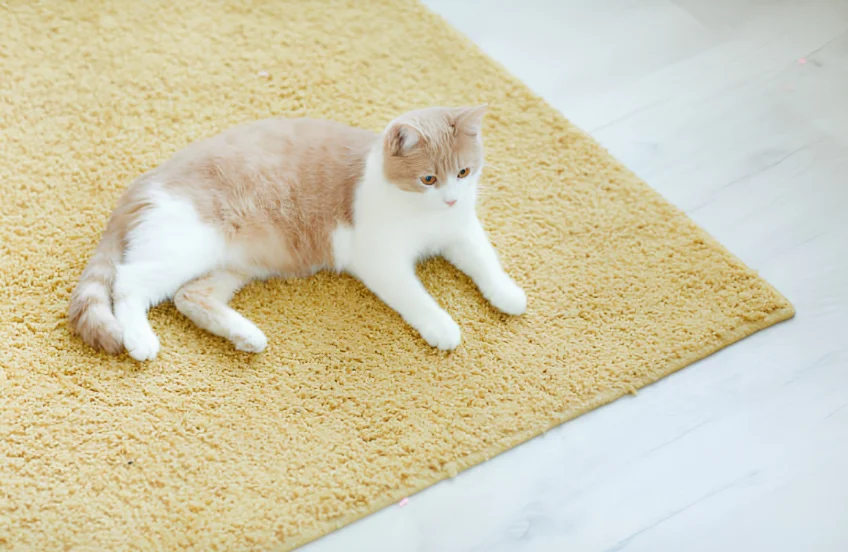
To remove cat urine smell from carpet, you need to treat the urine itself, not simply cover the odor with fragrance. Fresh accidents should be blotted quickly, while dried or repeated spots need treatment because moisture may have reached the carpet backing or padding. Using too much water, rubbing the spot, or combining cleaners can spread the problem and make drying harder.
A and B Carpet NY helps Brooklyn homeowners with pet stain and odor issues when home cleaning is not enough. In this guide, we explain the safest step-by-step approach, common DIY problems, and when professional cleaning makes sense.
Step 1: Blot Fresh Urine Before It Spreads
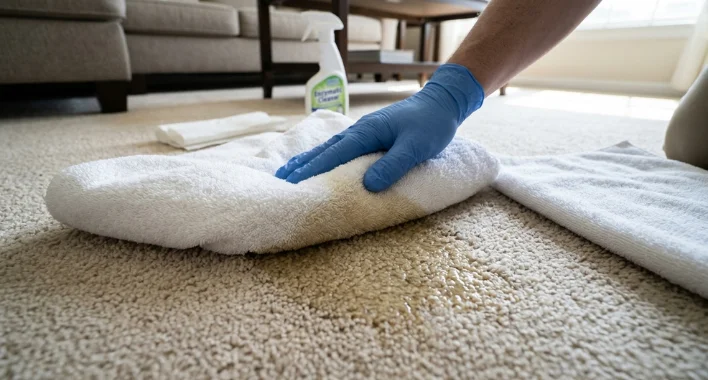
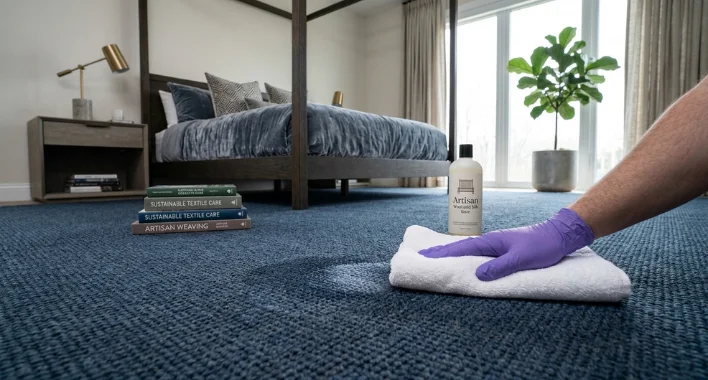
Start with absorbent white towels or paper towels. Press them onto the wet area, lift, and replace them as they become damp. Continue until little moisture transfers. Work from the outside edge toward the center so the spot does not spread farther across the carpet.
Do not scrub. Scrubbing can push urine sideways, disturb the pile, and drive moisture deeper. If the accident has dried, move to locating the complete affected area.
Step 2: Find the Entire Urine Spot
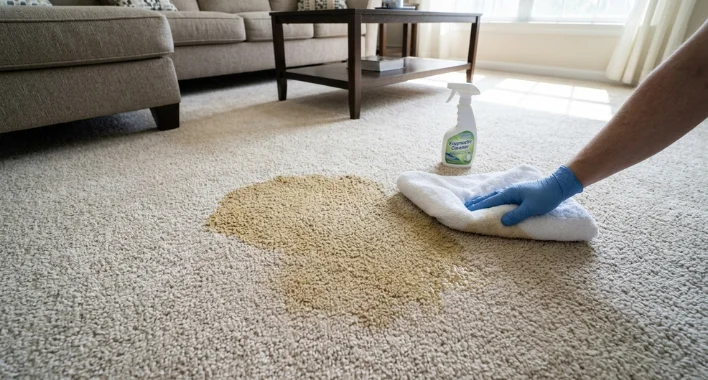
A visible mark may not show how far urine traveled underneath. Check whether the odor extends beyond the stain. Repeated accidents can overlap, making the source harder to identify. Inspect section by section instead of soaking a large area.
See how to eliminate carpet odors at home effectively for other odor causes.
Step 3: Use a Carpet-Safe Pet Urine Treatment
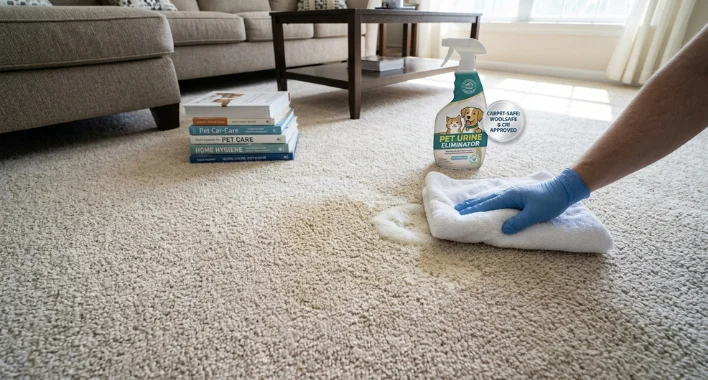
Choose a pet urine product labeled for carpet and test it in a hidden area first. Follow the directions for amount and contact time. Overwetting can carry moisture into the backing and slow drying.
Cornell Feline Health Center notes that cat-soiled areas should be cleaned promptly and odors need to be neutralized rather than simply deodorized. It also advises avoiding cleaners containing ammonia or vinegar because their smell can resemble urine and may be irritating.
This distinction matters when learning how to remove cat urine odor from carpet. A pleasant scent does not necessarily mean the urine residue has been addressed.
Step 4: Blot Again and Remove Remaining Moisture
After the recommended contact time, blot the area with clean white towels. If the product directions call for rinsing, use a controlled amount of cool water and blot again. Do not flood the carpet.
Using several products can make the process harder. Residue may leave the carpet stiff or make it difficult to judge whether the original odor is gone.
|
Carpet Condition |
Best First Action |
Main Risk |
|
Fresh accident |
Blot immediately |
Urine spreading deeper |
|
Dried spot |
Locate the full area |
Missing hidden residue |
|
Repeated accidents |
Check a wider section |
Backing or pad involvement |
|
Odor after drying |
Reassess the source |
Repeated surface treatment |
Step 5: Let the Carpet Dry Completely
Use fans and ventilation when practical, and keep people and pets away until the area is dry. Avoid judging the result while the carpet is still damp.
Once dry, check again. If the smell is gone, vacuuming can resume. If it returns, the remaining source may be below the surface. That is a common reason people struggle to remove cat pee smell from carpet after several home treatments.
Also read how to clean carpet at home without renting a machine.
DIY Cleaning Can Work, but These Problems Can Slow You Down
A small, fresh accident is often manageable at home. The difficulty increases when urine has dried, the cat has used the same spot repeatedly, or the carpet has already been treated several times.
Common DIY problems include:
-
Too much moisture: Soaking the carpet can move urine deeper and extend drying time.
-
Treating only the visible mark: The odor source may extend beyond what you can see.
-
Rubbing instead of blotting: This can spread the affected area and disturb the carpet pile.
-
Using several products: Layers of residue can make later cleaning more difficult.
-
Stopping before full drying: Damp carpet can hide whether the odor has been removed.
If product choice is your main concern, our pet-safe carpet cleaner guide covers what to consider before applying a cleaner.
Why Professional Treatment May Be Faster for Persistent Odor
If you keep asking how do you get cat urine smell out of carpet after several attempts, the problem may no longer be a simple surface spot. Repeated DIY treatment means more product, more drying time, and more trial and error without knowing how deep the urine has traveled.
A professional inspection can narrow down the affected area before treatment begins. That can make the process more efficient when there are several accident spots, older urine, recurring odor, or possible backing and padding involvement.
A and B Carpet NY provides pet stain and odor removal in Brooklyn for these situations. If the surrounding carpet also needs broader cleaning, professional carpet cleaning may be appropriate.
How to Know Home Treatment Has Reached Its Limit
Stop repeating the same home process if the odor returns after complete drying, becomes stronger in humid conditions, or covers a wider area than the original accident. Those signs can point to residue that surface treatment did not fully reach.
Professional help also makes sense when several rooms are affected or repeated cleaning has left the area overly wet or stiff. The goal is to avoid repeating a method that is no longer solving the problem.
Need Help Removing Cat Urine Smell? A and B Carpet NY Can Help
If you have tried to remove cat urine smell from carpet and the odor keeps returning, A and B Carpet NY can inspect the affected area and provide treatment based on the carpet’s condition. Professional service can reduce repeated trial and error when urine has reached deeper layers or several spots need attention.
Visit our pet stain and odor removal service, check the areas we serve, or call (800) 659-0691 to discuss your carpet concern with our team.
Frequently Asked Questions
A UV light may help reveal some dried urine spots in a dark room, making hidden accident areas easier to inspect.
Cat urine may cause color changes in some carpets, especially when a spot remains untreated for a long period.
Padding may need replacement when urine has heavily saturated it and odor continues even after the carpet above has been properly treated.
Keep pets away until the carpet is completely dry and follow any additional waiting time listed on the cleaning product label.
Cats may return to a previously soiled area if odor remains, although repeated accidents can also have behavioral or health-related causes.